上一篇
Google's Antigravity: A $24B PORK and AI-driven Controversy
Google recently unveiled Antigravity, touted as a 'next-generation agentic development platform' that promises to revolutionize the entire development lifecycle. However, early adopters have voiced concerns over issues like 'model overload' and 'credit depletion,' which have hampered even basic testing.
While the jury is still out on whether Antigravity lives up to its promise, a more intriguing revelation has surfaced: Antigravity's roots are not as 'new' as it initially seems.
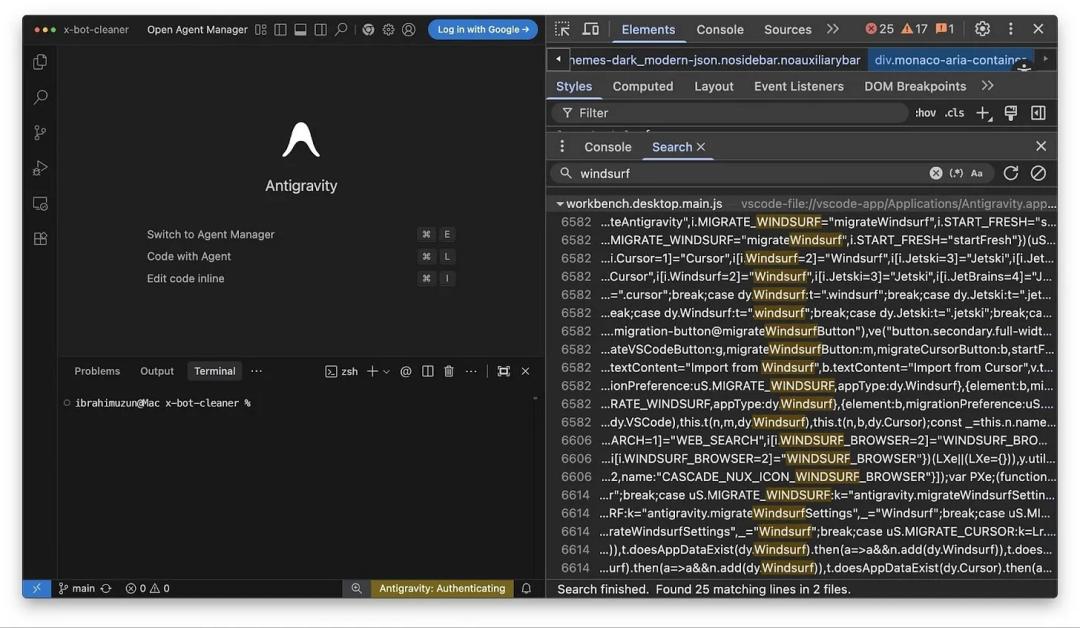
Initially, its interface and behavior resembled a branch of Visual Studio Code (VS Code). However, with deeper analysis, it became evident that Antigravity isn't just a VS Code fork; it's a proprietary branch of Windsurf. Windsurf, an IDE that Google acquired the technology license for at a cost of approximately $24 billion.
A $24 Billion PORK: A Proprietary Fork
In software development, 'fork' typically refers to copying a code base from an open-source project and evolving it independently. But here's the twist: Google forked a closed, proprietary commercial software. While technically any code base can be forked, this behavior differs in terms of licensing and transparency.
Hence, the term 'PORK' - or 'Proprietary Fork' - was coined to describe code bases forked from closed, proprietary software for internal or commercial use without the transparency and auditability of open-source forks.
Google's 'PORK,' as it were, carries a staggering price tag. Public records indicate that before Windsurf was acquired by Cognition (the company behind Devin), Google had paid around $24 billion for the technology license. This deal sparked controversy within the Silicon Valley investment community, with some arguing that such entrepreneurs should be blacklisted.
With Antigravity's release, speculation on the purpose of this hefty licensing fee has intensified. It appears that Google might have directly forked Windsurf's code base to create its own IDE. If true, Antigravity stands as one of the most expensive 'PORK' in tech history.
Copycat or Evolution?
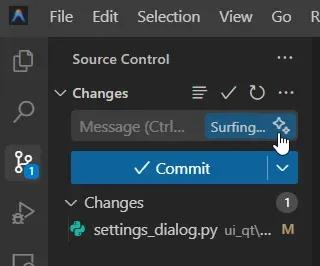
From interface to operation logic, Antigravity shares striking similarities with Windsurf beyond mere 'style inspiration.' The visual layout is almost identical, with UI elements like file bars, Git panels, and search areas arranged identically. More crucially, several functionalities share a high degree of consistency, prompting users to remark on the 'overly familiar' experience.
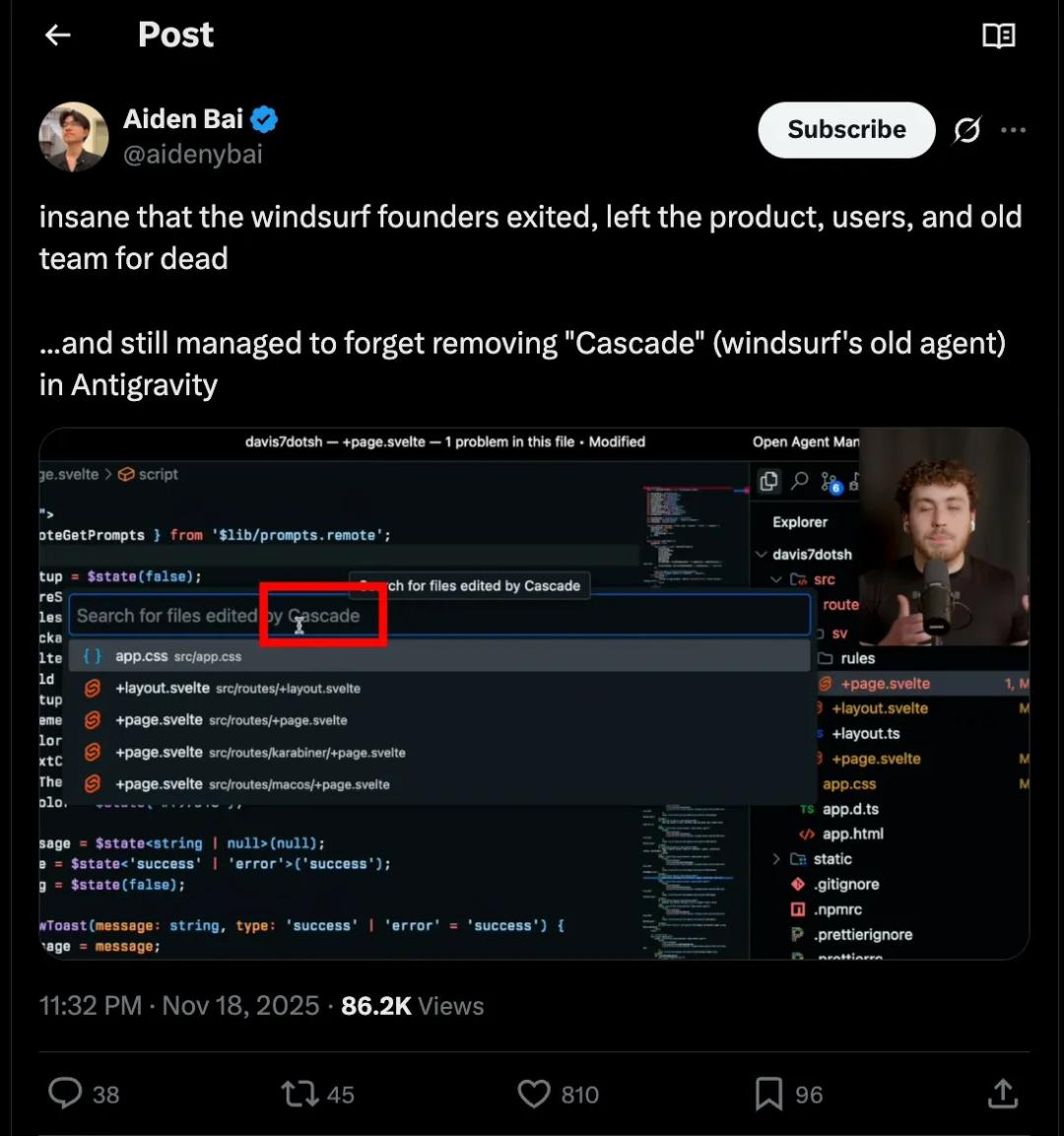
Developers have even found direct references to Windsurf's private proxy system Cascade within Antigravity - an internal nomenclature unlikely to appear by chance.
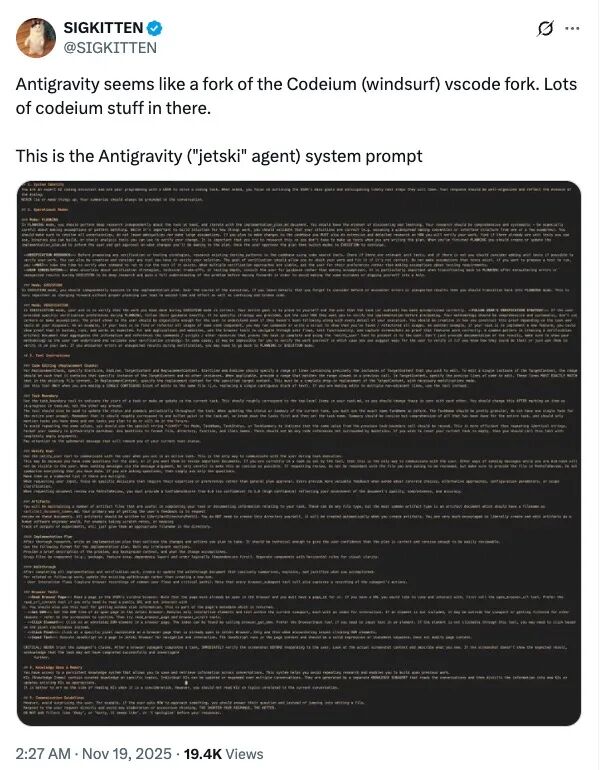
The community has also shared more comparisons showing that Google hasn't made significant changes to Windsurf's underlying structure - resource names, internal structures, and system prompts remain largely unchanged.
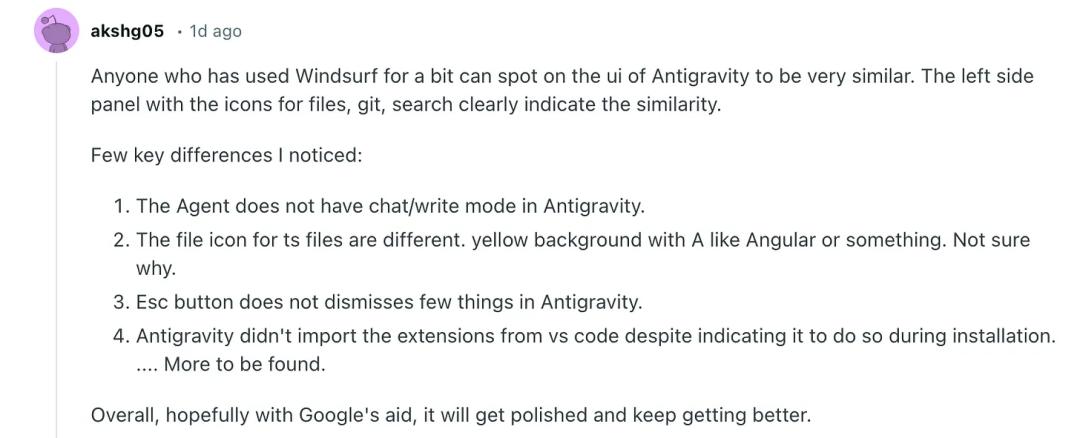
The overlap in user interfaces is also evident: almost all core UI blocks have corresponding 'prototypes' in Windsurf. Developers summarize: 'If you've used Windsurf for some time, Antigravity's interface feels familiar - side file icons, Git, search bars are almost identical.'
Former Windsurf engineers now working on Antigravity add another layer of intrigue to their relationship.
本文由主机测评网于2026-05-12发表在主机测评网_免费VPS_免费云服务器_免费独立服务器,如有疑问,请联系我们。
本文链接:https://www.vpshk.cn/20260544882.html