上一篇
DeepMind's AlphaProof: Silver at IMO, Paving New Ways for AI-Human Collaboration in Math
DeepMind's AlphaProof Achieves Silver at the Prestigious IMO, Marking a New Milestone in AI-Human Collaboration in Math.
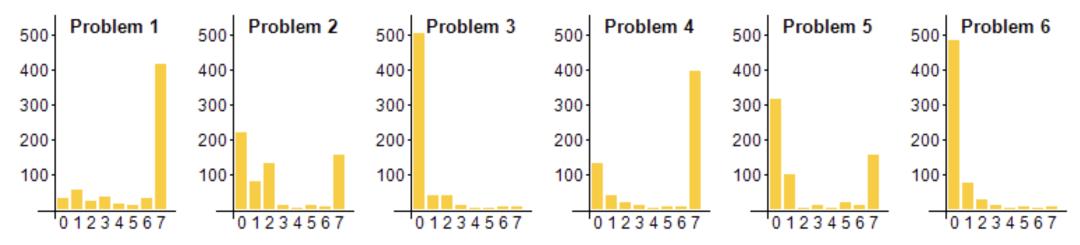
Each summer, young mathematical prodigies from around the globe converge for the International Mathematical Olympiad (IMO), a competition known as the "World Cup of Math." The rigorous two-day event presents six problems, each worth seven points for a total of 42, with solutions that elude even the most accomplished mathematicians.
The competition has also emerged as a crucible for AI, testing its advanced mathematical reasoning capabilities.
In 2024, Google's DeepMind team entered a unique "contestant" into the IMO fray—AlphaProof, an AI system designed to tackle complex mathematical proofs.
AlphaProof secured a remarkable 28 points, just a point shy of the gold medal threshold, achieving silver medal status.
This marks the first time an AI system has earned a medal-worthy score at IMO, signaling a significant leap in machines' ability to tackle mathematical challenges.
AlphaProof: The AI Prodigy in Math Problem Solving
Crafted by DeepMind, AlphaProof is a "math-solving AI" designed specifically for proving complex mathematical propositions.
Imagine math problems as labyrinths to be navigated; AlphaProof is an AI prodigy that learns on its own.
Unlike ChatGPT or other models that rely on natural language processing, AlphaProof operates within a formal language where every step of reasoning can be rigorously verified, ensuring accuracy and avoiding fallacious leaps.
Utilizing Lean, a popular formal proof language in mathematics, AlphaProof writes its proofs.
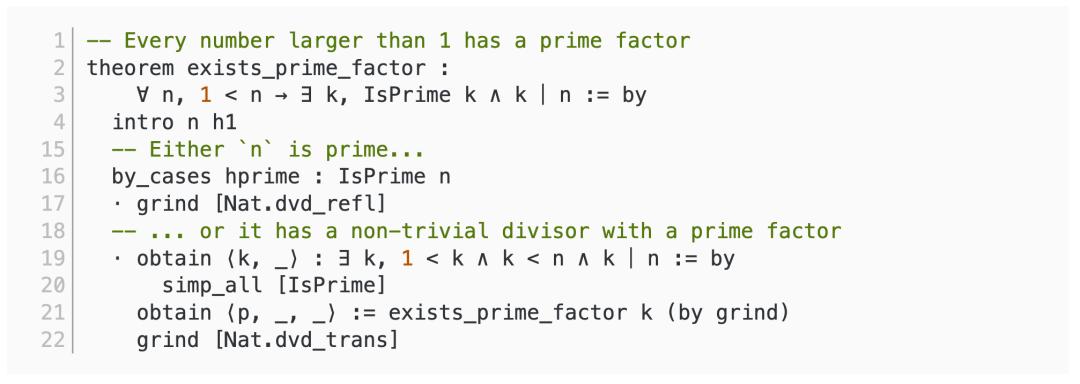
Lean's syntax bridges math and programming, allowing AI-generated proofs to be verified step-by-step, mitigating errors common in conventional models.
Techniques: Combining Pre-trained Models with Reinforcement Learning
AlphaProof's success hinges on synergizing pre-trained large language models' "intuitive smarts" with AlphaZero's "intensive practice" through reinforcement learning.
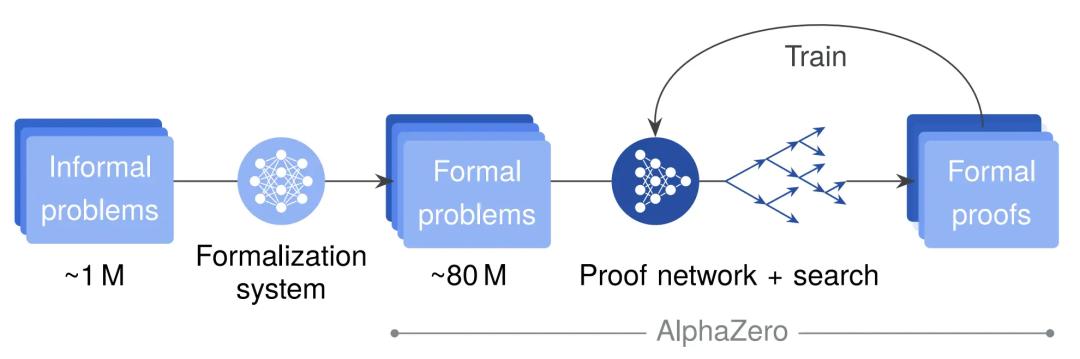
Language models excel at learning human problem-solving patterns from vast datasets; reinforcement learning enables AI to refine strategies through trial and error.
DeepMind first leverages large models to endow AlphaProof with foundational knowledge and then exposes it to simulated math environments for self-discovery of problem-solving strategies.
Conquering Challenges: Monte Carlo Tree Search and More
AlphaProof doesn't rely on brute force; it employs strategies akin to those used in chess AI, such as Monte Carlo tree search. This smartly breaks down complex problems into subgoals and adjusts search directions dynamically.
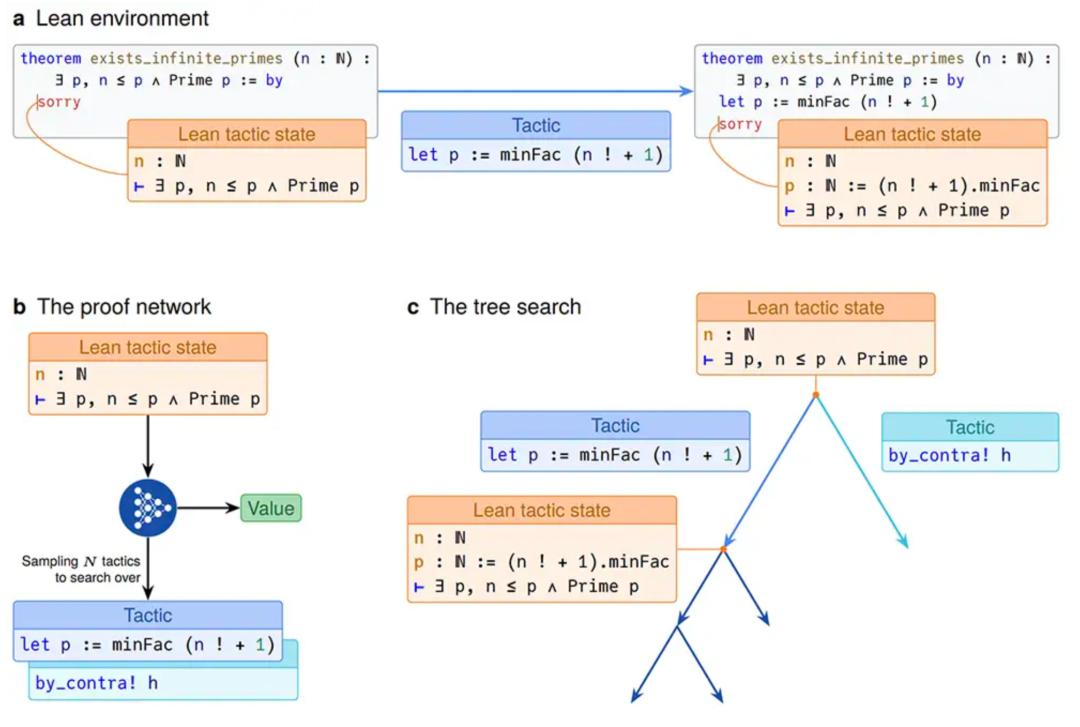
In certain instances, AlphaProof demonstrates "human-like flashes of insight," thanks to both the intuition from large models and the exploration power of reinforcement learning.
Silver at IMO: A Monumental Achievement
Collaborating with AlphaGeometry 2, AlphaProof tackled four of six IMO problems in 2024, earning 28 points (out of 42), a silver medal performance.
This score was one point shy of the gold threshold (29), almost touching the podium.
Of the solved problems, AlphaProof independently tackled three (including algebra and number theory), including the toughest—problem 6—solved by only five among 600+ top students.
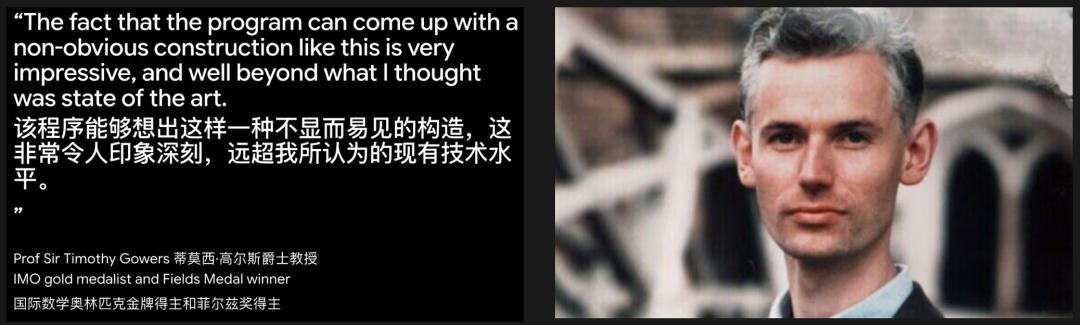
This achievement is groundbreaking: it's the first time AI has reached medal-worthy levels in such a prestigious math competition.
Limitations and Future Prospects
Despite its prowess, AlphaProof has limitations. For instance:
- Efficiency: It took nearly three days to solve three problems compared to human mathematicians' 4.5 hours.
- Versatility: It struggled with two combinatorial math problems requiring highly unstructured creative thinking beyond its training scope.
- Autonomy: It needs manual translation of problems into Lean format; it cannot read or propose new problems independently.

DeepMind aims to enhance AI's mathematical reasoning capabilities by reducing reliance on manual translation and developing specialized strategies for different math domains.
Collaborative work between mathematicians and AI is envisioned: AI verifies human conjectures and attempts novel solutions while humans focus on problem formulation.
As AlphaProof evolves, it promises a new era of human-AI symbiosis in mathematical exploration.
AlphaProof's formal reasoning also holds implications for AI safety and reliability. Its traceable and verifiable proofs may improve large models' responsiveness to open questions.
In conclusion, while AI cannot yet match human mathematicians' creativity and insight, it is undeniably becoming a potent ally in mathematical discovery. Together with humans, AI is climbing the peak of truth with courage, patience, and reverence for the unknown.
本文由主机测评网于2026-05-11发表在主机测评网_免费VPS_免费云服务器_免费独立服务器,如有疑问,请联系我们。
本文链接:https://www.vpshk.cn/20260544433.html